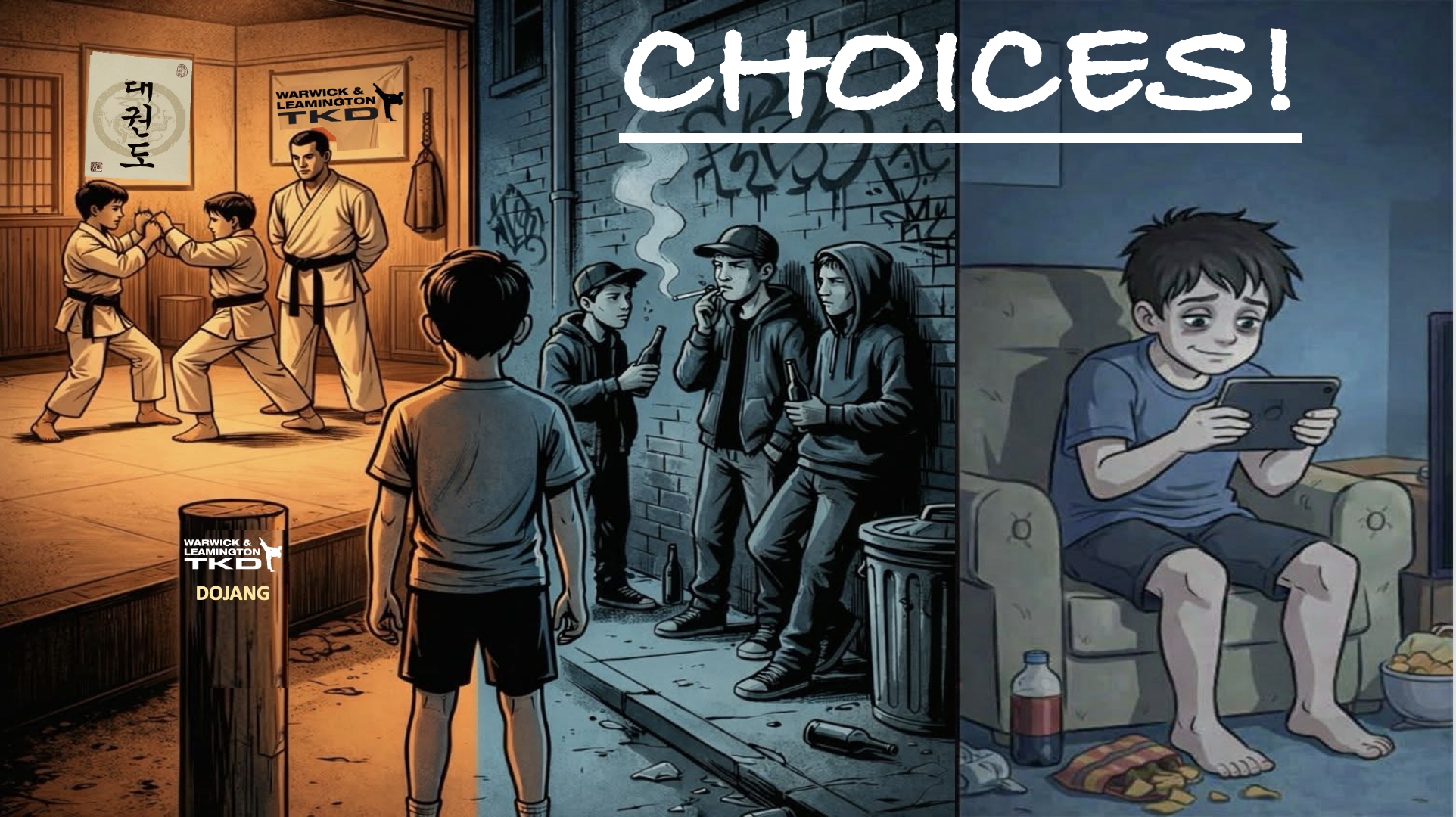
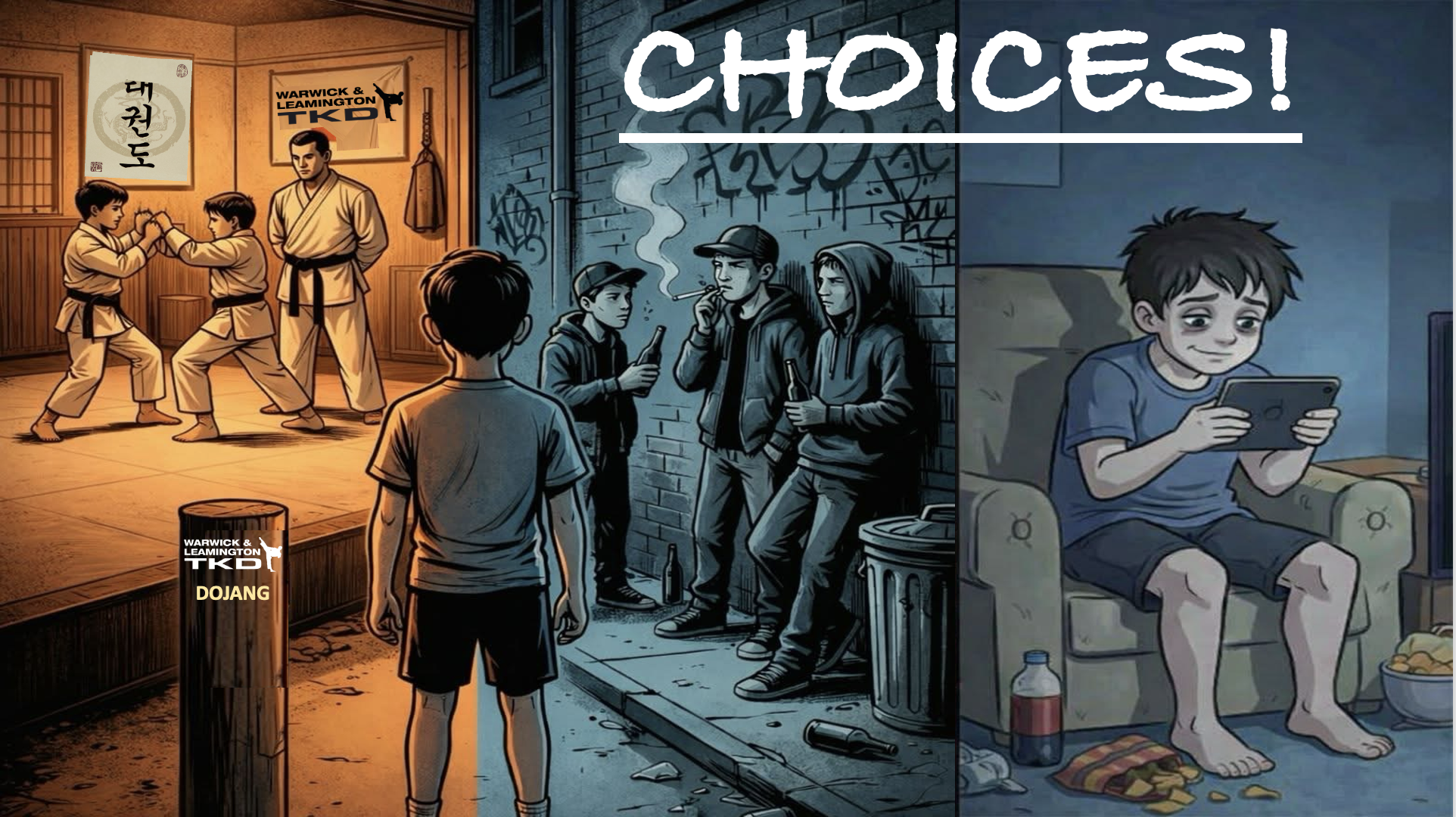
The image is simple, but the message is not.
On one side, a child sits absorbed in a screen, passive, slouched, disengaged, awake too late. Or they’re out with the wrong people, pulled into peer pressure and negative influence. On the other side, a child trains, focused, disciplined, learning standards, respect, and that actions have consequences. It’s positive growth and development, built day by day, week by week.
The difference between those two paths is not chance, It’s choice.
The modern distraction
Today’s world is designed to capture attention. Screens are immediate, easy, and endlessly stimulating. Left unchecked, they become the default. At the same time, there’s increasing pressure from unsociable behaviour and gang culture, especially when children feel bored, ignored, or disconnected.
The issue isn’t technology itself, it’s the lack of balance. A growing child’s brain is still developing, and if there are no positive influences to counteract what they consume online, those influences become the “program” that shapes their habits and attitudes.
A child who spends most of their time sedentary doesn’t just lose physical fitness. They can lose:
Structure and routine
Resilience and confidence with effort
The ability to engage with discipline (because effort starts to feel “optional”)
Exposure to toxic influences that are far more common online than many parents realise
Person-to-person influence matters
Peer groups shape children fast. Gang culture offers belonging, but it also offers consequences. Martial arts offers something better: community with standards, positive influence and a moral culture. When your child trains at Warwick & Leamington TKD, they gain a sense of identity that doesn’t connect with the negative options.
They’re surrounded by a supportive, learning-focused environment where behaviour matters, respect is expected, and role models lead by example. That gives your child the confidence and courage to say “no” when others are pushing the wrong direction.
What training teaches (beyond kicking and striking)
Training teaches a child that growth comes from effort, not convenience. They learn discipline, respect, consequences, patience, and confidence. They don’t just become physically stronger, they become more capable as a person.
And that matters for life. Confidence, self-control, and resilience don’t only show up in the dojang, they follow them into school, friendships, and the choices they make later.
Children don’t choose their environment. Parents do.
There are 168 hours in a week. Training takes 2 hours per week (and sometimes a little more with practice at home).
2 hours out of 168. Time isn’t the limitation, priority is.
If you want your child to have a realistic chance at success, physically, emotionally, and psychologically, then give them a positive path that builds them instead of one that numbs them.
The choice you make now determines the result later.
Children don’t drift toward the better path on their own. They are guided there by the adults who care enough to choose it first.
We’re here to help your child grow into the best version of themselves.