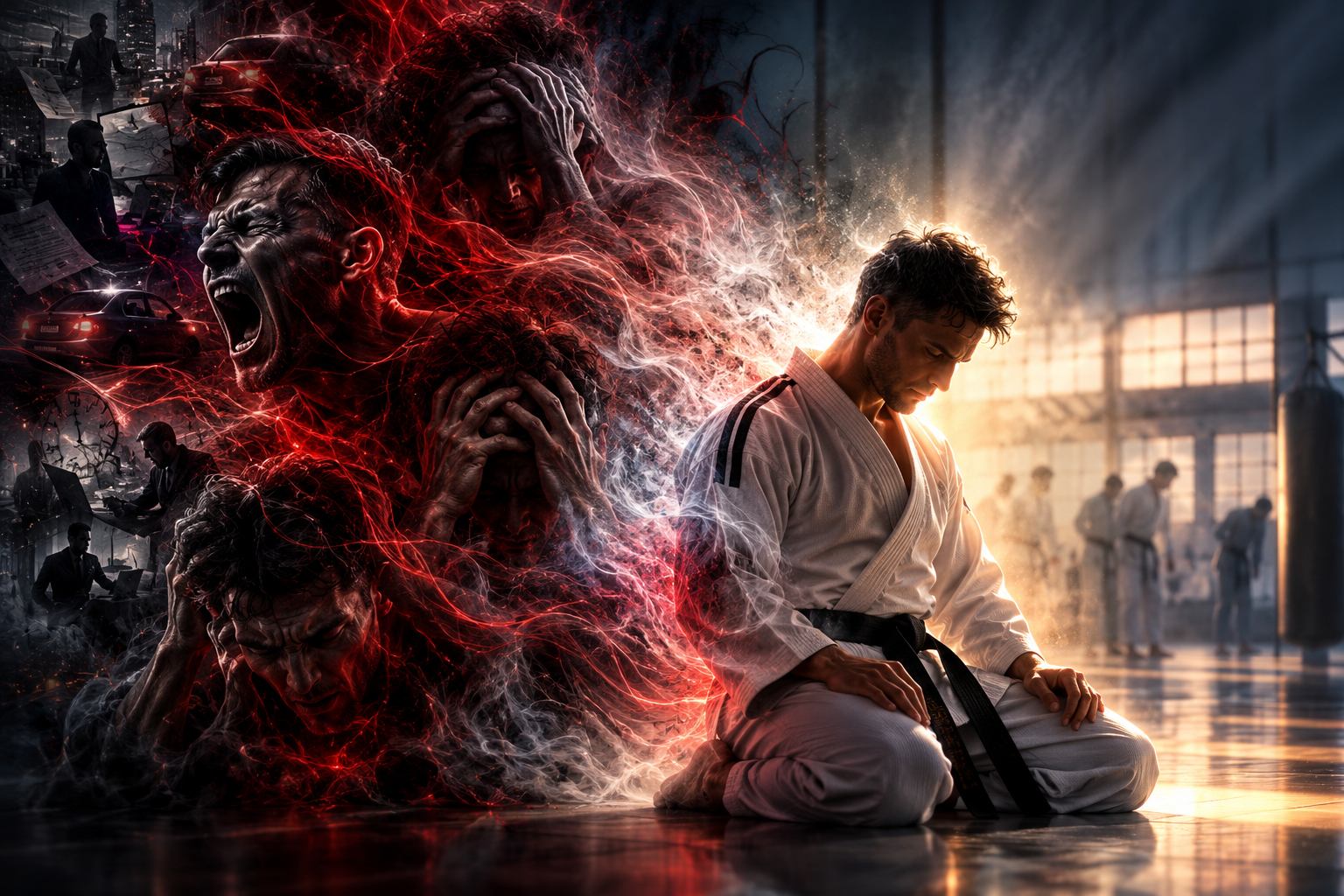
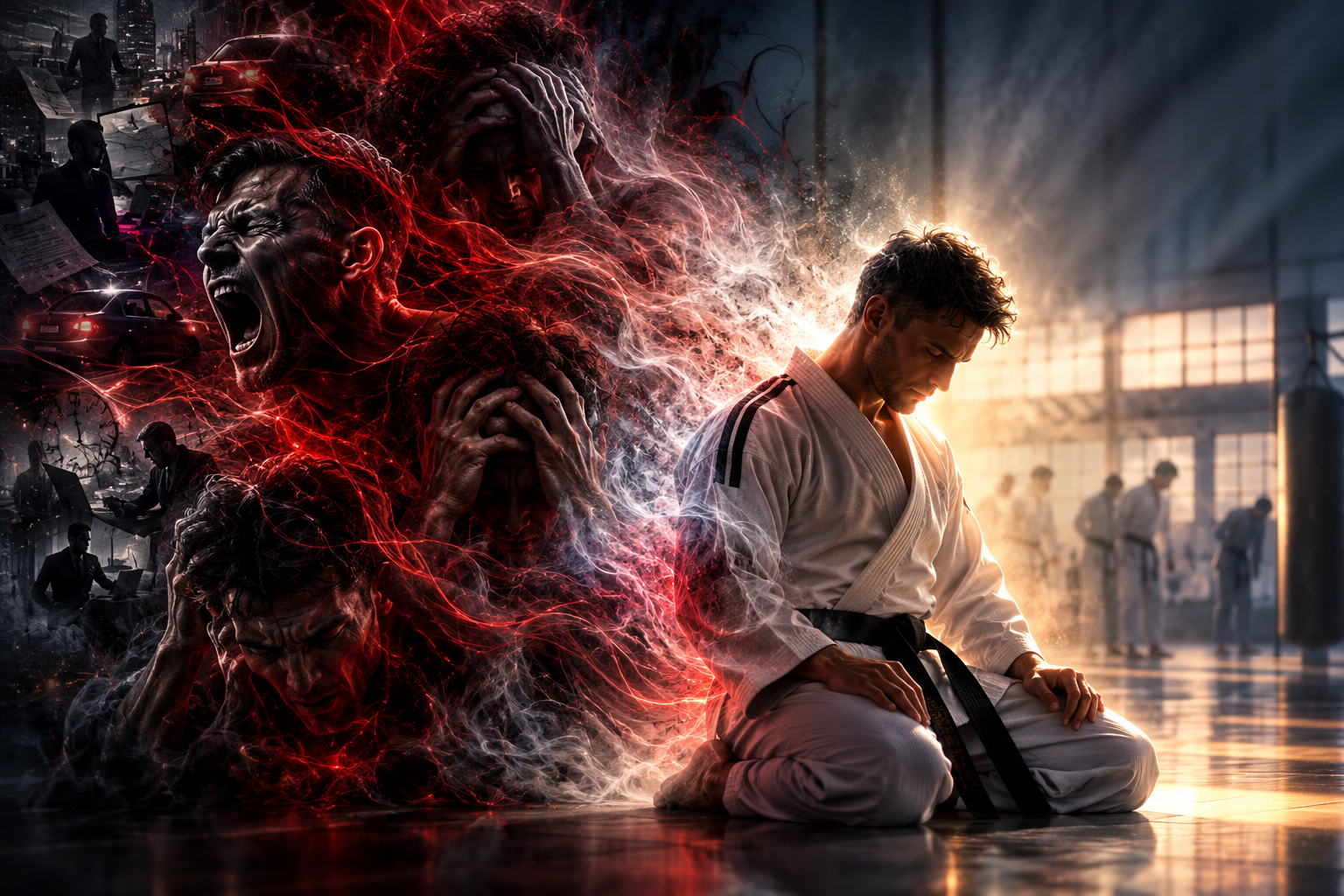
We spend a lot of time talking about what we bring into the dojang: discipline, effort, respect, determination and a willingness to learn. But perhaps we don't talk enough about what we can leave at the door.
Life can be challenging. Work pressures, family responsibilities, financial worries, personal problems and the general stresses of everyday life can sometimes leave us feeling mentally and physically exhausted. And let's face it, there are evenings when the last thing you feel like doing is getting changed, leaving the house and heading to training.
Ironically, those are often the evenings when you need Taekwon-Do the most.
Leaving the Outside World Behind
When you enter the dojang and bow, it's more than simply following martial arts etiquette. For me, it represents a transition. For the next hour, whatever has been happening in your life can take a back seat. You put on your dobok, tie your belt, bow as you enter and prepare to focus on something completely different.
You're no longer thinking about that difficult meeting at work, the email you haven't answered, the argument you've had or the hundred other things demanding your attention. You're there to train, learn, challenge yourself and hopefully enjoy the company of people who share your enthusiasm for Taekwon-Do.
The outside world can wait.
Training Demands Your Attention
One of the wonderful things about martial arts is that it's difficult to spend too much time worrying about everyday problems when you're concentrating on getting a complicated pattern right, remembering a sequence of techniques or trying not to get punched or kicked during sparring!
Whether you're working on patterns, practising techniques, hitting pads, developing your fitness or working with a partner, training demands your attention. And that's a good thing.
For that hour, your mind is occupied with something positive and constructive. Of course, training isn't always easy. There will be moments of frustration when a technique refuses to work, when your coordination seems to have deserted you or when you feel that everyone else is progressing faster. But that's part of the journey.
Nobody gets everything right, nobody is perfect, and making mistakes is how we learn. The important thing is that you keep trying.
More Than Just Training Partners
There's another important element to this sense of escapism, and that's the people around you.
When you bow to a training partner, you're showing respect, but you're also acknowledging that you're there to help each other improve.
Sometimes that means offering encouragement, sometimes constructive feedback, and occasionally having a laugh together when something goes spectacularly wrong. We all come from different backgrounds, professions and walks of life. Outside the dojang, we may have very little in common. But inside, we share the same challenges, frustrations, achievements and enjoyment of Taekwon-Do. Your training partners become part of your support network, often without either of you realising it.
That sense of belonging and camaraderie is one of the things that in my opinion makes a good martial arts club so special.
The Nights You Don't Feel Like Training
Over the years, I've heard plenty of students say something along the lines of:
"I nearly didn't come tonight. I've had a terrible day and really couldn't be bothered."
And then, at the end of the session:
"I'm so glad I came. I feel so much better now."
I think most of us have experienced that feeling. You arrive tired, stressed or distracted, but after an hour of physical effort, concentration, a bit of sweat and perhaps the satisfaction of giving a punchbag a good hiding, you walk out feeling different. The problems you arrived with haven't magically disappeared. But perhaps they don't seem quite so overwhelming anymore.
You've cleared your head, released some frustration, achieved something positive and spent time with people who encourage and support you. Sometimes that's exactly what we need.
Leaving the Dojang
Just as the opening bow marks the beginning of training, the closing bow marks its end.
It's an opportunity to reflect on the effort you've made, acknowledge what you've learned and leave behind any frustration about the things that didn't go quite as planned.
You don't have to leave having mastered every technique.
You don't have to be the best person in the class.
You simply need to know that you turned up, made the effort and took another step forward.
And hopefully, you're leaving with a clearer mind, a sense of achievement and a smile on your face.
My Final Thought
At Warwick & Leamington Taekwon-Do, we set high standards and take our training seriously. We want our students to develop good technique, confidence, discipline and the ability to defend themselves. But that doesn't mean we can't enjoy the journey.
In fact, I believe enjoying your training, feeling part of a supportive club and having somewhere you can temporarily escape the pressures of everyday life are just as important to your long-term development.
Taekwon-Do won't solve all of life's problems. But sometimes an hour in the dojang gives you the mental space, energy and perspective to deal with them a little better.
So the next time you've had a difficult day and find yourself thinking about skipping training, remember how you usually feel when you walk out afterwards.
Come in, bow, leave the outside world at the door, train hard, have a laugh and go home feeling better than when you arrived.